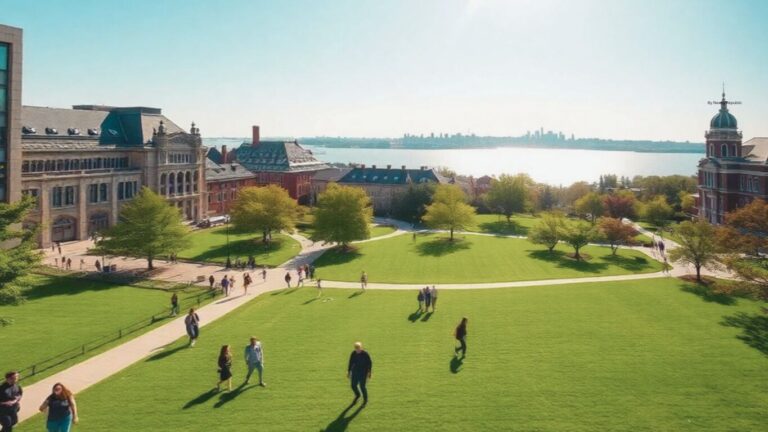
Imagine yourself standing on a Stevens Institute of Technologycampus with the Hudson River at your feet and the skyline of New York City directly across the water. For you, that is Stevens Institute of Technology a location where practical tech knowledge and urban energy collide. Stevens, which is tucked away in Hoboken, New Jersey, is a popular choice for students who want to pursue careers in math, science, technology, and engineering. Since its founding in 1870, this institution has established a reputation for fusing challenging coursework with practical projects that immediately prepare students for the workforce. It is a wise choice for anyone interested in engineering innovation at Stevens Institute of Technology since it combines traditional roots with modern concepts.
Table of Contents
The Academic Core: Programs Driving Future Technology
Stevens maintains a laser-like concentration on areas that influence the future. The programs here encourage you to think large and create tangible things, from cutting-edge tech blends to engineering fundamentals. Classes that connect theory to practice will prepare you to face challenges in the real world.
Leading Undergraduate Disciplines
It’s simple to understand why majors like computer science and electrical engineering are so well-liked when you first start your undergraduate studies at Stevens. These programs are well regarded because they integrate solid foundations with contemporary, practical applications, such as creating energy-efficient power systems or coding for smart devices. For instance, in electrical engineering, you’ll study circuits in class and then immediately go to the lab to apply what you’ve learned exactly the kind of experience that employers value.
Additionally, computer science is noteworthy. Through practical projects, the courses go beyond theory and make algorithms and software come to life. Every curriculum incorporates hands-on learning, so you’re not simply reading about technology you’re actually building tools, robots, and apps from the ground up. Stevens students quickly get excellent positions thanks to this practical approach, demonstrating the effectiveness of this type of education.
Graduate Studies and Specialized Masters
Stevens provides graduate degrees that delve deeply into trending subjects for students with higher aspirations. Consider financial engineering, which computes figures for Wall Street gains, or cybersecurity experts, where you hack moral systems to discover defense strategies. These programs combine disciplines like technology and business to give you a comprehensive understanding of how money interacts with machines.
In this case, research is crucial. You could participate in initiatives on market models or secure networks, connecting academic work to current business needs. Stevens’ graduate studies are unique because of this bridge, which transforms book knowledge into a career booster.
Experiential Learning: The Stevens Edge
What makes Stevens unique? The integrated practical instruction makes it feel like a secret weapon. Co-ops, which enable you to work full-time at esteemed companies while earning money and credits, are required for many majors. Imagine spending a semester applying what you learned in class to work on big projects like Google or IBM.
Internships are also simple because of the NYC location. Senior design is the culmination of working together to solve a real-world business problem, like building a delivery drone. Partners that open doors you didn’t know existed include industry titans like Microsoft, Deloitte, and Pfizer. Because of this practical effort, Stevens students graduate with resumes that shout “hire me.”
Research & Innovation: Fueling Discovery on the Hudson
Stevens is a center for discoveries that transform lives, not just a place to learn. Labs are teeming with ideas for technology that addresses global problems, such as smart cities and clean power. As a professor or student, you can participate, turning the Hudson-side campus into a hub for innovative technology.
Key Research Thrust Areas
Explore AI and machine learning at Stevens and you’ll find students working on some seriously meaningful projects like tools that can forecast the weather more accurately or help detect diseases earlier. A lot of this happens through the Center for Intelligent Systems, where coding isn’t just theory. Ideas are tested in real-world ways so AI actually solves problems instead of feeling like science fiction.
Sustainable energy is another big focus. Students and faculty work on solar technologies and other clean solutions that can power homes while cutting down on waste, supported by the Sustainable Energy Institute. And then there’s advanced manufacturing, where 3D printing is used to create custom parts for everything from healthcare to automobiles.
All of these areas line up with major national priorities like the growing demand for green jobs in the U.S. Students don’t just watch from the sidelines either. They contribute to grant-funded research, helping turn early ideas into real prototypes that might just lead to the next big breakthrough.
Funding and National Recognition
Stevens receives significant funding for its work more than $50 million in research grants annually, primarily from federal agencies like DOE and NSF. This places it in the R1 club, which denotes superior research results. It is evident in articles published and patents filed, demonstrating Stevens’ influence in the IT community.
National accolades are common, such as U.S. News rankings for engineering graduate programs. These measures demonstrate that Stevens fulfills its commitment to innovation.
Technology Transfer and Entrepreneurship
The lab is not where innovation ends. With the Schlower Center providing space and guidance to turn patents into businesses, Stevens fosters startups based on student ideas. A coding project could become your own app company thanks to venture funds, which help seed money flow.
Risk-taking is encouraged by the atmosphere; pitch nights and hackathons help you feel at ease discussing audacious ideas. Alumni frequently return as mentors, creating a vicious cycle in which Stevens research boosts the local economy.
Campus Life and Location Advantage
Because of its ideal location, life at Stevens combines the rigorous academic schedule with enjoyable breaks. Every day seems connected to the activity because to Hoboken’s pedestrian-friendly streets and NYC trains. You strike a balance between reading and brief views of the skyline or eats at nearby restaurants.
The Hoboken Advantage: Proximity to Global Industry
Just a short distance from Manhattan? For Stevens students, that is priceless. Take a PATH train to get to an internship at a finance company or tech startup without having to deal with the commute. Professionals from Goldman Sachs to Google attend networking events, where you can discuss careers over coffee.
It’s also a cultural victory. After class, take in a Broadway production or visit museums to combine education with urban energy. When people search for “Stevens Institute of Technology location benefits,” this advantage easy access to employers and inspiring vibes comes up.
Student Engagement and Extracurriculars
Stevens comes to life when you participate. Tech groups that promote teamwork outside of the classroom, such as the Robotics Team, create bots for national competitions. Hackathons are weekend events where participants write answers to actual puzzles in hopes of winning prizes or job offers.
Sports maintain equilibrium; NCAA Division III track and soccer teams attract large audiences. You can locate your crew by adding layers through cultural conversations or groups for women in STEM. This combination makes campus feel more than just a place to learn.
Residential Experience and Facilities
The most suitable housing options are apartments for upperclassmen or dorms with views of the river. Tech benefits like study nooks and high-speed internet are included in new halls. The Center for Laboratory Experiences has equipment for bioengineering and nanotechnology tests, demonstrating how labs shine brightest.
Makerspaces are open late for tinkering, and the facilities have a contemporary yet comfortable vibe. This place is designed for makers, so you won’t run out of tools.
Admissions Profile and Student Success Metrics
Are you considering applying? Stevens seeks motivated people who are passionate about technology. Your enthusiasm is evident in your essays and projects; it’s fair but selective. The payoff is significant after graduation, with jobs and salaries that start lives.
Navigating the Application Process
Start with the basics: transcripts, SAT or ACT scores, and essays that demonstrate your enthusiasm for technology. Focus on your strengths because Stevens also values test-optional routes. For potential engineers, showcasing any builds or scripts you’ve finished is advantageous.
Suggestions? Make your rec letters unique to show how persistent you are. Go if you can; the Hoboken tour is a determining factor for many. Deadlines come early, so prepare ahead of time.
Career Outcomes and Salary Benchmarks
95% of graduates find employment or enroll in graduate school within six months. The average starting salary for engineers is $85,000, which is higher than many of their peers. Jobs at FAANG companies are common in fields like software engineering, which push even further.
Co-op experience increases hiring by 20%, according to statistics. It’s evidence that Stevens properly prepares you.
Alumni Impact and Network Strength
Think of CEOs in fintech or leaders at NASA alumni are amazing. With chapters in NYC and other places for convenient connections, the network has 40,000 members. Events put you in touch with mentors who help you make career transitions.
Stevens is given a lifetime boost by this web, which opens doors for years to come.
Conclusion: Developing Technological Leadership for the Future
You have amazing access to New York City, practical research opportunities, and academically challenging courses at Stevens Institute of Technology. There are labs that inspire new ideas, programs that help you develop practical skills, and a campus location that leads to countless opportunities. Students pick Stevens for three main reasons: unique learning opportunities, a location that improves employment possibilities, and research that addresses real-world issues.
Stevens is at the vanguard of rapidly advancing technology, assisting students in becoming tomorrow’s innovators. Your future self will appreciate it if you begin your application on their website if you’re considering it.
FAQ About Stevens Institute of Technology
❓ Is Stevens Institute of Technology a good school for engineering and technology?
Yes. Stevens is widely respected for its engineering, computer science, and technology-focused programs. The curriculum blends theory with hands-on work, which helps students graduate with real-world experience not just classroom knowledge.
❓ Where is Stevens located?
Stevens is located in Hoboken, New Jersey, right across the Hudson River from New York City. You can literally see the Manhattan skyline from campus, and the PATH train gets you into the city in minutes.
❓ What makes Stevens different from other tech schools?
Stevens stands out because of:
- Strong industry connections in NYC
- A big emphasis on co-ops, internships, and project-based learning
- Research that tackles real problems
- A close-knit campus community
It’s very career focused students don’t just learn, they build and solve things.
❓ How strong are career outcomes for graduates?
Very strong. Around 95% of graduates are employed or in grad school within six months, and engineering salaries often start at $80,000–$85,000+. Many students get job offers directly from co-ops or internships.
❓ Do undergraduate students get hands-on experience?
Absolutely. From freshman year onward, students work on labs, design projects, coding assignments, and sometimes even research teams. By the time they graduate, they already have a portfolio of real work.
❓ What kinds of research can students get involved in?
Students can work in areas like:
- Artificial intelligence and machine learning
- Clean and renewable energy
- Smart manufacturing and 3D printing
- Finance and data analytics
- Cybersecurity
A lot of projects are tied to national initiatives and federal grants, so the work matters.
❓ What is the campus environment like?
Campus life mixes tech-driven academics with a lively, urban-inspired social scene. Students enjoy Hoboken cafés, waterfront walks, clubs, athletics, and quick trips to NYC. It feels energetic but still personal.
❓ Is Stevens hard to get into?
Stevens is selective but fair. Strong academics help, but passion for technology, projects, curiosity, and initiative also matter. Test-optional pathways exist for some applicants.
❓ What types of students thrive at Stevens?
Students who usually do well here are:
- Curious problem-solvers
- Hands-on learners
- Interested in STEM fields
- Motivated and career-focused
- Excited about being near NYC
If you love building things or applying ideas, you’ll probably feel at home.
❓ Does Stevens support entrepreneurship?
Yes — in a big way. Students can turn ideas into startups with:
- Mentorship
- Innovation centers
- Funding opportunities
- Hackathons
- Networking
Many student projects evolve into real companies.
Important Things to Know Before Applying to Stevens
⭐ Location = Opportunity
You’re studying minutes from New York City, one of the world’s biggest hubs for tech, finance, startups, consulting, and media. That means:
- More internships
- More networking
- More career exposure
This advantage is huge.
⭐ Hands-On Learning Is Everywhere
Expect to:
✔ Build things
✔ Code things
✔ Test things
✔ Present things
This is not a sit-and-memorize type of school.
⭐ Co-Ops and Internships Are a Big Deal
Many students work full-time for a semester or two while earning credit and a paycheck. Employers include:
- IBM
- Deloitte
- Goldman Sachs
- Pfizer
- Major startups
It’s real-world training — before graduation.
⭐ Strong Return on Investment
Stevens grads often start higher-than-average salaries. If you’re career-driven, the payoff is meaningful.
⭐ Research Isn’t Just for Grad Students
Undergrads can join research labs early — sometimes even freshman year.
⭐ The community is supportive rather than ruthless.
In reality, professors are familiar with their pupils.
Teams work together.
Beginners are welcome in clubs.
It’s human but competitive.
⭐ Academics Are Difficult
Prepare for:
- Math
- Problem-Solving
- Initiatives
- Due dates
However, there are support networks, including peers, mentors, advisors, and tutors.
⭐ Campus Activities
You will discover:
- Clubs
- Cultural communities
- Teams working on robotics
- Sports
- Hackathons
- Social gatherings
Something is always going on.
⭐ Stevens Appreciates Passion
If you’ve:
- constructed a project
- went to a science fair
- Something was coded.
- disassembled a device
- “Just for fun,” I tried engineering
That sticks out.