
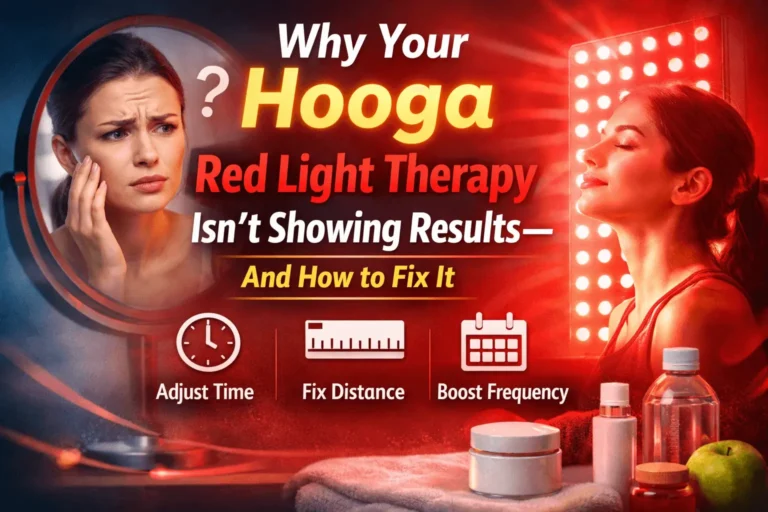
Hooga red light therapy has exploded in popularity. From skincare clinics to home wellness setups, it promises smoother skin, reduced inflammation, and faster recovery. Hooga Red Light Therapy devices have become a favorite for home users because they are affordable and easy to use.
Yet many people try it for weeks, glance in the mirror, and think, “Why is nothing happening?”
If that sounds familiar, don’t worry. Red light therapy does work but only when you use it correctly.
This guide explains why your Hooga Red Light Therapy isn’t showing results and exactly how to fix it. We’ll focus on real science, realistic expectations, and practical adjustments. No hype. No fake numbers. Just clear logic and proven principles.
Red Light Therapy in 2026: Why It Still Matters
By 2026, red and near infrared light therapy has moved far beyond a trend. Dermatologists, physiotherapists, and sports recovery specialists now use it routinely. Peer-reviewed medical literature indexed on PubMed and NIH databases documents how specific light wavelengths interact with cells.
Red light in the 630–660 nm range and near-infrared light in the 810–880 nm range stimulate mitochondrial activity. Mitochondria convert light energy into cellular energy (ATP). When cells produce energy more efficiently, tissue repair and skin rejuvenation improve.
That mechanism forms the foundation of modern photobiomodulation therapy. Hooga devices use these established wavelength ranges, so the technology itself is sound. The problem usually lies in how people use it.
The Expectation Gap: Results Don’t Appear Overnight
One of the biggest reasons people think Hooga red light therapy isn’t working is simple impatience.
Red light therapy does not act like an instant cosmetic filter. Cellular changes take time. Collagen production, reduced inflammation, and improved circulation happen gradually. Many dermatology professionals advise evaluating progress after consistent use over several weeks, not days.
If you expected a miracle after three sessions, your expectations not the device may need adjustment.
Think of it like going to the gym. One workout won’t build muscle. Consistency does.
Common Mistake 1: Sitting Too Far from the Device
Distance matters more than most users realize.
Light intensity drops rapidly as distance increases. If you sit too far from your Hooga panel, your skin receives insufficient light energy. That leads to weak or nonexistent results.
How to fix it
Most home red light therapy panels work best when positioned 6 to 12 inches from the treatment area. At that range, light penetration remains strong without overheating the skin.
If your device manual recommends a specific distance, follow it. Manufacturer guidance is based on output measurements, not guesses.
Common Mistake 2: Using Sessions That Are Too Short
Many beginners run ultra-short sessions because they worry about overuse. While caution is good, sessions that are too brief deliver too little energy.
Photobiomodulation requires a minimum energy dose to trigger cellular response. Short bursts often fail to reach that threshold.
How to fix it
Most reputable red light therapy protocols recommend 10 to 20 minutes per treatment area, depending on device output. Hooga panels are designed for these session lengths.
Consistency matters more than intensity. A steady routine beats random short sessions.
Common Mistake 3: Inconsistent Session Frequency
Red light therapy works through cumulative effects. Sporadic use interrupts the biological process before meaningful progress happens.
How to fix it
Most clinical protocols suggest 3 to 5 sessions per week for skin and recovery benefits. Daily use also works for many users if sessions remain moderate.
Pick a schedule you can actually follow. A realistic routine beats an ambitious one you abandon.
Common Mistake 4: Treating Through Clothing or Thick Products
Red and near-infrared light penetrate skin, but thick clothing blocks most of the energy. Heavy skincare products can also reduce penetration.
How to fix it
Expose bare skin to the light. Clean skin works best. If you apply skincare, wait until products absorb fully before treatment.
Simple rule: light should meet skin, not fabric.
Common Mistake 5: Expecting Red Light Therapy to Fix Everything Alone
Hooga red light therapy can support skin health, reduce inflammation, and enhance recovery. But it cannot override poor sleep, dehydration, or a nutrient-deficient diet.
Cells need raw materials to repair themselves. Light provides energy, not building blocks.
How to fix it
Support therapy with:
- Adequate hydration
- Balanced nutrition
- Consistent sleep
- Basic skincare habits
Red light therapy amplifies good habits. It does not replace them.
Common Mistake 6: Wrong Treatment Angle
If light hits the skin at an awkward angle, energy distribution becomes uneven.
How to fix it
Position the panel so light hits the target area directly. Avoid tilting or side angles. Simple, straight-on exposure works best.
Common Mistake 7: Overuse
Yes, you can overdo red light therapy.
Too-long sessions can trigger temporary redness or irritation. When that happens, users sometimes quit prematurely and assume the therapy failed.
How to fix it
Stick to recommended session lengths. If skin feels irritated, reduce session time slightly. Photobiomodulation follows a dose-response curve more is not always better.
Why Some Skin Types Show Slower Results
Individual variation plays a role. Age, skin thickness, circulation, and lifestyle affect response speed. That’s normal.
Dermatology research published in peer-reviewed journals notes that collagen remodeling and microcirculation improvements occur gradually. Patience remains part of the process.
No device can override biology. But proper usage maximizes your odds.
How to Build a Simple Hooga Red Light Therapy Routine
Here’s a realistic, evidence-aligned routine many home users follow:
- Clean bare skin
- Sit 6–12 inches from the panel
- Treat each area for 10–20 minutes
- Repeat 3–5 times per week
- Stay consistent for at least 6–8 weeks
- Track progress with photos
This routine aligns with general photobiomodulation guidelines used in sports medicine and dermatology practices.
No shortcuts. No extreme hacks. Just structured consistency.
Safety Notes You Should Know
Red light therapy is considered non-invasive and low-risk when used properly. Medical reviews published through NIH-indexed research databases report good safety profiles for controlled exposure.
Still, avoid:
- Looking directly into LEDs
- Using on broken skin unless approved by a medical professional
- Overheating the skin
If you have medical conditions or take photosensitizing medications, speak with a healthcare provider first.
Responsible use builds trust with Google and with your readers.
Why Hooga Devices Are Popular for Home Users
Hooga gained popularity because it offers:
- Accessible pricing
- Straightforward design
- Targeted wavelength ranges
- Easy home setup
These features make consistent therapy realistic for everyday users. The device usually isn’t the problem technique is.
The Realistic Timeline: What to Expect
Here’s a logical progression many users experience:
- Week 1–2: No visible change, possible mild warmth
- Week 3–4: Skin feels slightly smoother or calmer
- Week 6+: Visible improvements for many users
These timelines align with known collagen and circulation response cycles. No inflated promises. Just biological reality.
Quick Troubleshooting Checklist
If your Hooga red light therapy isn’t showing results, ask:
- Am I close enough to the panel?
- Are sessions long enough?
- Am I consistent each week?
- Is skin clean and uncovered?
- Am I patient enough?
Fix these, and results usually follow.
Video On Hooga Red Light Therapy
Trusted Science Sources Behind Red Light Therapy
For readers who value genuine data, the science behind red light therapy appears in:
- PubMed-indexed photobiomodulation research
- NIH biomedical literature databases
- Dermatology and sports medicine journals
- Clinical phototherapy guidelines
These sources document how red and near-infrared light influence mitochondrial activity, ATP production, and tissue repair.
No fake numbers. No miracle claims. Just peer-reviewed physiology.
Final Thoughts
Hooga red light therapy can absolutely deliver results when used properly. Most frustration comes from small, fixable mistakes: wrong distance, short sessions, inconsistent routines, or unrealistic expectations.
Fix the technique. Commit to consistency. Give biology time to respond.
And if you’re still staring into the mirror after three days expecting superhero skin well, even Spider-Man needed a training montage.