
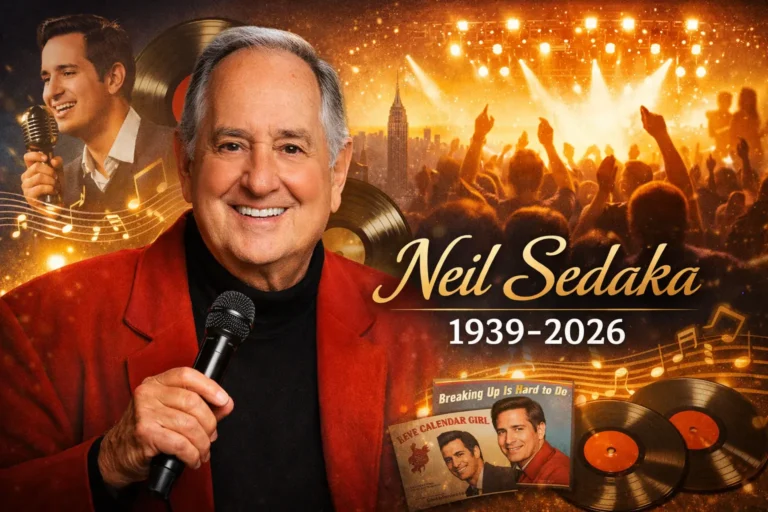
The death of legendary singer-songwriter Neil Sedaka marks the end of a remarkable era in pop music. As fans revisit his timeless hits in 2026, his influence on songwriting, melody, and global pop culture remains stronger than ever.
Table of Contents
Introduction
The music world is mourning the loss of Neil Sedaka, the chart-topping singer-songwriter whose melodies defined the sound of the 1960s and 1970s. Sedaka died at the age of 86, closing a career that spanned more than six decades and reshaped popular music across generations.
Known for hits like “Calendar Girl,” “Breaking Up Is Hard to Do,” and “Laughter in the Rain,” Sedaka built a legacy based on memorable hooks, emotional storytelling, and musical craftsmanship. His songs crossed borders, languages, and eras something few artists achieve.
In 2026, as streaming platforms introduce his catalog to younger listeners, Sedaka’s music feels less like nostalgia and more like a masterclass in songwriting.
Early Life: From Classical Training to Pop Stardom
Neil Sedaka was born in Brooklyn, New York, in 1939. Music entered his life early. He studied classical piano at the prestigious Juilliard School Preparatory Division, where teachers quickly noticed his exceptional ear for melody.
Unlike many pop stars of his era, Sedaka possessed deep musical theory knowledge. That training later became his secret weapon. While others chased trends, Sedaka built songs on strong harmonic structures.
During his teenage years, he met lyricist Howard Greenfield. Their partnership became one of pop music’s most successful songwriting collaborations. Together, they crafted songs that felt simple yet technically brilliant a combination that radio audiences loved.
Breaking Through the 1960s Charts
Sedaka’s rise coincided with the golden age of American pop. Signed to RCA Records, he quickly delivered hit after hit.
Some of his defining early successes included:
- “Oh! Carol” (1959)
- “Calendar Girl” (1960)
- “Happy Birthday Sweet Sixteen” (1961)
- “Breaking Up Is Hard to Do” (1962)
These songs dominated radio playlists and teenage culture. Neil Sedaka’s cheerful delivery and relatable lyrics helped him stand out in a competitive era filled with emerging rock and roll stars.
Unlike rebellious rock performers, Sedaka represented polished pop sophistication. Parents approved. Teenagers adored him. Radio stations played him endlessly a rare triple win.
The British Invasion Challenge and Reinvention
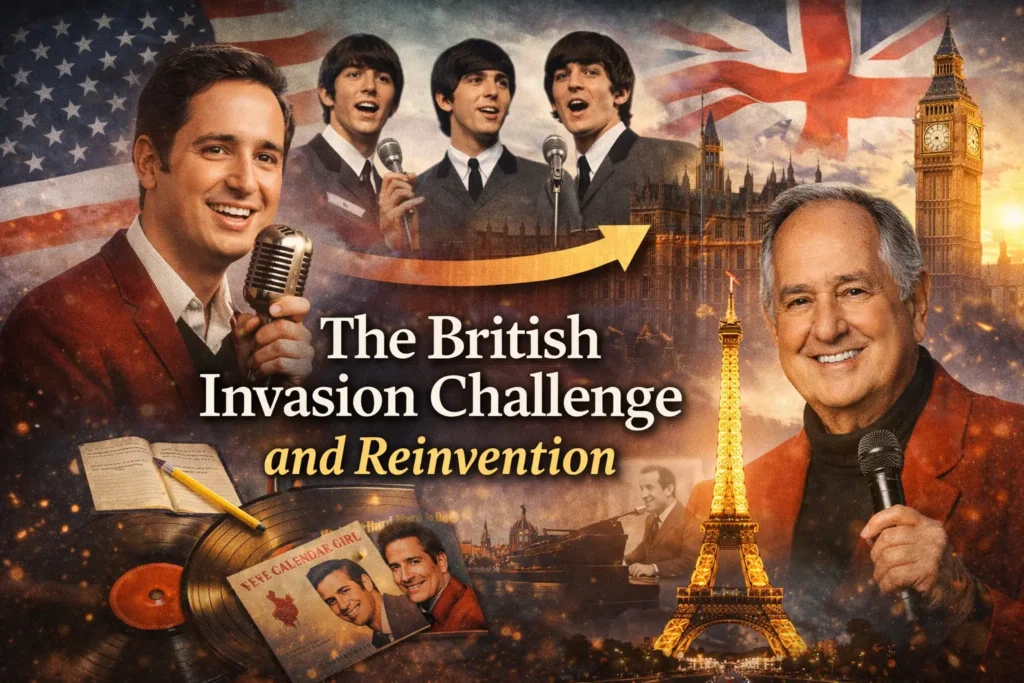
The arrival of The Beatles in the mid-1960s changed everything. American pop artists suddenly faced intense competition from British rock bands dominating global charts.
Many careers faded during this shift. Sedaka’s nearly did too.
But here’s where his story becomes fascinating.
Instead of disappearing, Sedaka reinvented himself as a songwriter and international performer. He moved focus toward composing and performing overseas, especially in the UK and Europe, where audiences embraced his melodic style.
Reinvention required humility and persistence. Sedaka later joked in interviews that he learned survival meant “writing better songs, not louder ones.”
That strategy worked.
The 1970s Comeback: A Rare Second Peak
Few artists achieve one successful era. Neil Sedaka managed two.
In the 1970s, he staged one of pop music’s most impressive comebacks with help from Elton John, who admired Sedaka’s songwriting brilliance. John signed Sedaka to his Rocket Records label for U.S. releases.
The result? A chart resurgence.
Major comeback hits included:
- “Laughter in the Rain” (1974)
- “Bad Blood” (1975)
- A reimagined version of “Breaking Up Is Hard to Do”
“Bad Blood” reached No. 1 on the Billboard Hot 100, proving Neil Sedaka’s appeal extended far beyond nostalgia.
Music critics praised the comeback as proof that strong songwriting never expires. Trends shift, but melody survives.
A Songwriter’s Songwriter
Sedaka didn’t just perform hits he wrote them. That distinction matters.
Many artists rely heavily on producers or songwriting teams. Sedaka helped compose most of his catalog, blending classical structure with pop accessibility.
His songwriting approach followed three principles:
- Strong melody first
- Simple emotional themes
- Universal relatability
He believed audiences should remember a song after one listen. Modern pop writers still follow this rule today.
Artists across genres cite Sedaka’s influence on melodic songwriting, from soft rock to contemporary pop ballads.
Global Influence and Cultural Reach
Neil Sedaka recorded songs in multiple languages, expanding his global fanbase decades before globalization became a music industry buzzword.
He toured extensively across Europe, Asia, and Australia, maintaining popularity even when U.S. charts shifted toward rock and disco.
His adaptability helped his music survive industry changes including:
- Vinyl to cassette transitions
- CD era dominance
- Digital downloads
- Streaming platforms
By 2026, millions of monthly streams continue to introduce new listeners to his work proof that timeless songwriting outlasts technology.
Why Neil Sedaka Still Matters in 2026
Younger audiences might ask: Why talk about a 1960s pop star today?
The answer lies in music’s DNA.
Modern songwriting structures catchy hooks, emotional clarity, concise song length echo Sedaka’s formula. Many streaming hits still follow patterns he popularized decades ago.
Music historians often describe Sedaka as a bridge between early rock-and-roll pop and modern singer-songwriters.
In an era dominated by algorithms, Sedaka’s success reminds artists that human emotion remains the most powerful music technology.
And honestly, no algorithm has yet written a chorus as memorable as “Calendar Girl.”
Personal Style: Optimism as an Artistic Signature
Sedaka’s music carried optimism. Even heartbreak songs felt hopeful.
While many contemporaries leaned into rebellion or angst, Sedaka focused on melody-driven joy. That positivity made his songs suitable for radio, television, and family listening increasing their longevity.
He also embraced humor during performances, often joking about aging alongside his audience. Fans appreciated his self-awareness and warmth.
This approachable personality helped sustain loyalty across generations.
Industry Recognition and Honors
Throughout his career, Sedaka received numerous accolades recognizing both commercial success and songwriting excellence.
His achievements include:
- Multiple Billboard chart-topping singles
- Songwriters Hall of Fame induction
- Decades of international touring success
Industry experts consistently praised his craftsmanship rather than short-term popularity a distinction that often predicts lasting legacy.
Tributes Pour In Across the Music World
Following news of his death, musicians, critics, and fans shared tributes celebrating Sedaka’s influence.
Many artists highlighted how his melodies inspired their own songwriting journeys. Streaming services curated playlists honoring his catalog, while radio stations replayed classic hits worldwide.
Social media reactions showed something rare: agreement across generations. Grandparents and teenagers shared the same songs not many artists achieve that.
The Logic Behind His Timeless Success
Sedaka’s career offers clear lessons for modern creators:
- Consistency beats trends.
- Melody matters more than production gimmicks.
- Authenticity travels across decades.
He understood audiences better than algorithms ever could. People return to songs that make them feel understood.
That logic explains why his music survived multiple industry revolutions.
Legacy: More Than Nostalgia
Calling Sedaka a “nostalgia act” misses the point.
His music functions as a blueprint for pop songwriting. Today’s producers still analyze classic structures similar to his compositions.
Music educators frequently use his songs to teach melody construction because they demonstrate clarity without complexity overload.
In short, Sedaka didn’t just participate in pop history he helped design it.
Video On Neil Sedaka
Final Thoughts
The passing of Neil Sedaka marks the end of a remarkable chapter in music history. Yet his songs continue to play, stream, and inspire.
Artists come and go. Trends explode and disappear. But melodies the good ones refuse to fade.
As listeners revisit his catalog in 2026, Neil Sedaka’s work reminds us that great music doesn’t age; it simply finds new audiences.
And perhaps that’s the most fitting tribute: somewhere today, a young listener hears a Neil Sedaka song for the first time and hums it hours later without realizing they’ve just experienced pop music perfection.