
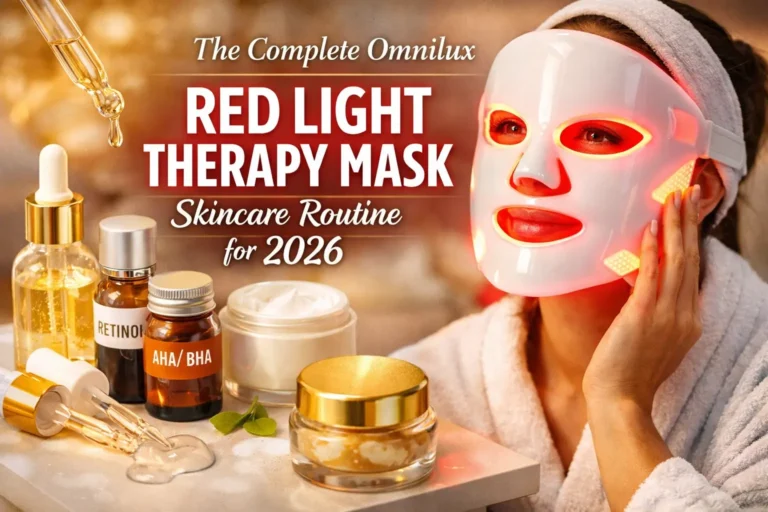
Omnilux Red Light Therapy Mask has moved from dermatology clinics into homes worldwide, becoming a staple in modern skincare routines. In 2026, devices like the Omnilux red light therapy mask are widely used by consumers seeking science-backed, non-invasive skin treatments.
Who is using it? Everyday skincare users, professionals, and aging-prevention-focused consumers.
What is it? A medical-grade LED mask delivering specific wavelengths of red and near-infrared light.
When should it be used? Consistently, several times per week, as part of a structured routine.
Where does it fit? At the center of a thoughtfully layered skincare regimen.
Why is it popular? Because clinical research supports its role in improving skin tone, texture, and signs of aging.
How should it be combined with acids, retinoids, and moisturizers? Carefully, with timing and formulation awareness.
This article explains how to build a complete, safe, and effective Omnilux red light therapy skincare routine for 2026, grounded in dermatological consensus and responsible product pairing.
Understanding How Red Light Therapy Works
Red light therapy (RLT) uses low-level wavelengths typically around 633 nm (red) and 830 nm (near-infrared) to penetrate the skin without causing thermal damage. Peer-reviewed dermatology literature shows these wavelengths can support cellular energy production by stimulating mitochondrial activity.
Importantly, red light therapy does not exfoliate the skin or thin the barrier. That makes it fundamentally different from acids or retinoids and allows it to be layered safely when used correctly.
Dermatologists emphasize that LED therapy works best as a supportive treatment, enhancing results from a consistent skincare routine rather than replacing topical products.
Why a Structured Routine Matters in 2026

As skincare formulations become more potent, improper layering increases the risk of irritation, barrier damage, and inconsistent results. In 2026, expert-led routines focus on:
- Skin barrier preservation
- Ingredient timing rather than overuse
- Device-based treatments integrated with topicals
A red light therapy mask is most effective when placed strategically within this framework.
Step 1: Cleansing – Preparing Skin for Light Exposure
Before using a red light therapy mask, skin must be clean and free from residue.
Best practice in 2026:
- Use a gentle, pH-balanced cleanser
- Avoid exfoliating cleansers before LED sessions
- Pat skin dry completely
Residual sunscreen, makeup, or occlusive oils can reduce light penetration. Dermatology guidelines consistently recommend applying LED devices to bare skin for optimal efficacy.
Step 2: Omnilux Red Light Therapy Mask – The Core Treatment
Once skin is clean and dry, apply the Omnilux red light therapy mask according to manufacturer instructions.
Typical clinical guidance includes:
- 10 minutes per session
- 3–5 sessions per week
- No topical products applied before treatment
Experts caution against extending session times beyond recommendations. More exposure does not equal better results and may increase sensitivity.
Step 3: Hydrating and Barrier-Supporting Serums
Immediately after red light therapy, skin is receptive to hydration. This window is ideal for barrier-supportive ingredients.
Recommended post-LED ingredients:
- Hyaluronic acid
- Glycerin
- Panthenol
- Ceramides
These ingredients replenish moisture without interfering with LED benefits. Clinical dermatology sources consistently note that hydration enhances skin recovery and comfort after light exposure.
Avoid applying strong actives at this stage unless advised by a dermatologist.
Pairing Red Light Therapy with Acids: What to Know
Chemical exfoliants remain widely used in 2026, but timing is critical.
Safe Guidelines for Acids:
- Use AHAs or BHAs on non-LED days, or
- Apply acids at a different time of day than red light therapy
Dermatologists advise against using acids immediately before LED sessions. Exfoliation can increase sensitivity, making skin less comfortable during light exposure.
Mild exfoliation (1–2 times per week) supports cell turnover without compromising the LED routine.
Moisturizers: Locking in Benefits
Moisturizing is essential after both hydration serums and active treatments.
Ideal moisturizer characteristics in 2026:
- Fragrance-free
- Non-comedogenic
- Rich in ceramides and cholesterol
Post-LED moisturization supports barrier repair and reduces transepidermal water loss. Clinical skin barrier research emphasizes consistency over product complexity.
Retinoids and Omnilux Red Light Therapy Mask: Strategic Timing
Retinoids remain a gold standard in dermatology, but they require careful coordination with LED therapy.
Evidence-Based Approach:
- Use red light therapy in the morning or early evening
- Apply retinoids only at night, on dry skin
- Avoid retinoids immediately before or after LED sessions
Dermatologists note that while red light therapy may support skin recovery, it does not eliminate retinoid irritation if overused.
Consistency and patience remain key.
Sunscreen: A Non-Negotiable Step
Any routine involving advanced treatments must include daily sun protection.
2026 sunscreen standards:
- Broad-spectrum SPF 30 or higher
- Applied every morning
- Reapplied with outdoor exposure
Red light therapy does not replace sun protection. Professional organizations continue to emphasize sunscreen as the most effective anti-aging product available.
Weekly Routine Example (Dermatologist-Aligned)
Morning (LED Days):
- Gentle cleanse
- Red light therapy mask
- Hydrating serum
- Moisturizer
- Sunscreen
Evening (Non-LED Days):
- Cleanse
- Acid exfoliant (1–2x weekly)
- Moisturizer
Evening (Retinoid Nights):
- Cleanse
- Retinoid
- Moisturizer
This structure reflects current clinical advice and minimizes ingredient conflict.
What Experts Emphasize in 2026
Dermatologists consistently highlight three principles:
- LED therapy supports, not replaces, skincare
- Overuse increases irritation without added benefit
- Barrier health determines long-term results
Professional guidance stresses that consumers should follow device instructions and consult qualified dermatology professionals for personalized care.
Video Source
Conclusion: Building Smarter Skincare with Red Light Therapy
In 2026, building a complete Omnilux red light therapy mask skincare routine means more than adding a device it requires thoughtful integration with acids, moisturizers, retinoids, and daily sun protection.
When used on clean skin, paired with hydration, timed carefully with active ingredients, and supported by consistent sunscreen use, red light therapy fits seamlessly into modern, evidence-based skincare. The future of skincare is not about doing more, but about doing things correctly, consistently, and responsibly.
For consumers, the takeaway is clear: red light therapy works best as part of a balanced routine grounded in dermatological science, not trends.