
NEWYou can now listen to Fox News articles!
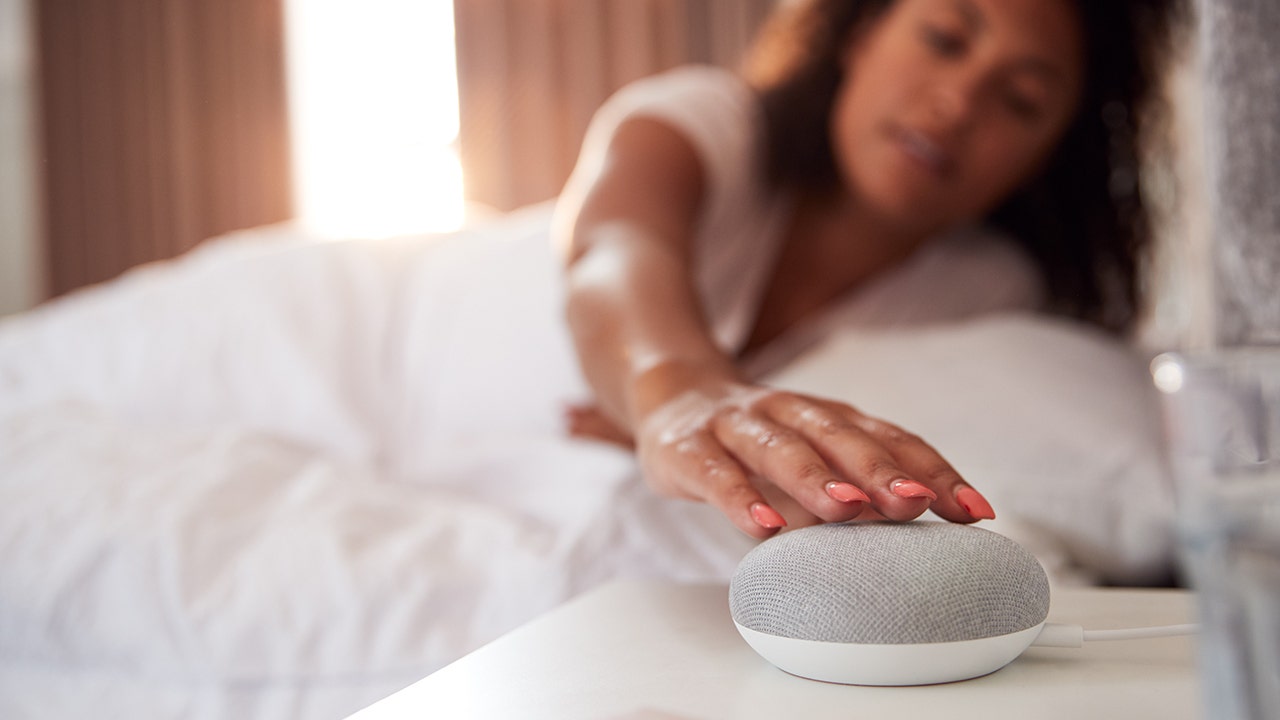
Think your sound machine is helping you sleep? It might be doing the opposite.
A new study from the University of Pennsylvania Perelman School of Medicine found that listening to pink noise at bedtime could disturb REM sleep (dream sleep) and sleep recovery.
The research, published in the journal Sleep, found that earplugs were significantly more effective at blocking out traffic noise during sleep.
SIMPLE NIGHTLY HABIT LINKED TO HEALTHIER BLOOD PRESSURE, STUDY SUGGESTS
The researchers observed 25 healthy adults between the ages of 21 and 41, in an eight-hour, seven-night sleep lab simulation, according to a Penn Medicine press release.
The participants said they did not previously use noise to help them sleep and did not have any sleep disorders.
Pink noise could disrupt REM sleep, according to Penn Medicine research. (iStock)
During the experiment, the participants slept under different sound exposures, including aircraft noise, pink noise, aircraft noise with pink noise, and aircraft noise with earplugs. The participants completed tests and surveys each morning to gauge sleep quality, alertness and other health effects.
Exposure to aircraft noise was associated with about 23 fewer minutes spent in the deepest stage of sleep compared to no noise, the study found.
Earplugs prevented this decline in deep sleep “to a large extent,” the release stated.
EXPERTS REVEAL EXACT BEDTIME THAT COULD PREVENT LATE-NIGHT ‘SECOND WIND’ INSOMNIA
Pink noise at 50 decibels, which sounds similar to “moderate rainfall,” was associated with almost a 19-minute decrease in REM sleep.
Aircraft noise and pink noise combined led to “significantly shorter” REM and deep sleep compared to noise-free nights. Time spent awake was also 15 minutes longer with this combination, which was not observed with solo aircraft or pink noise.
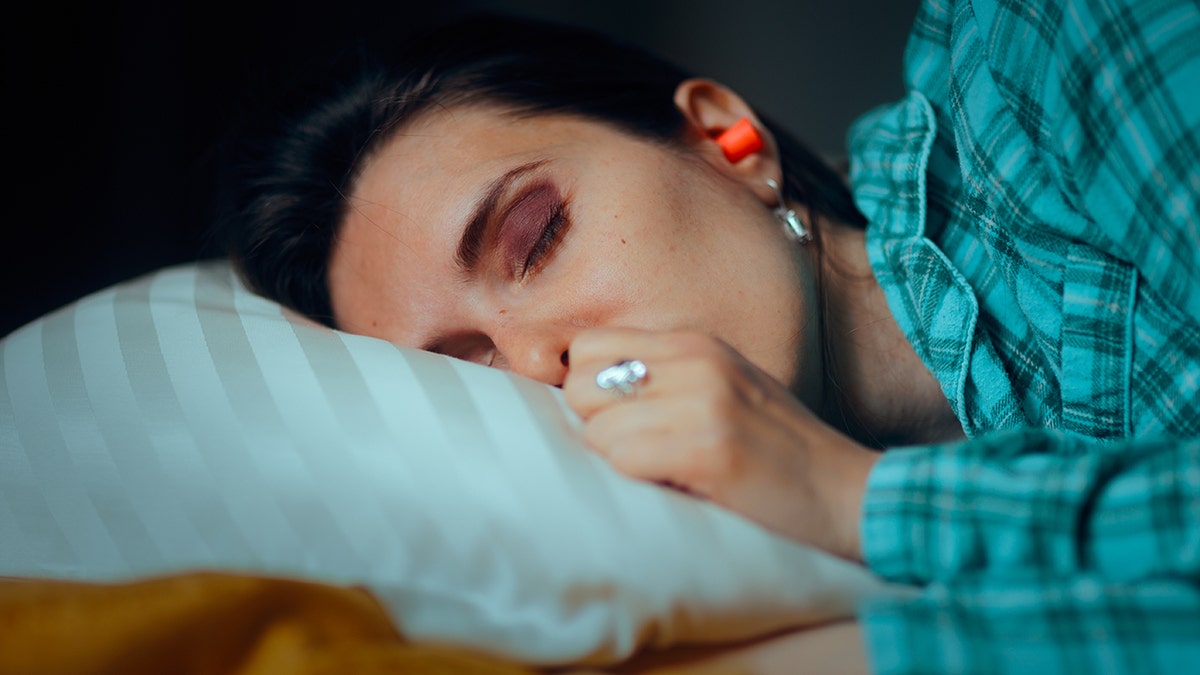
Earplugs were found to improve sleep quality among study participants. (iStock)
Participants said their sleep felt “lighter,” the overall quality was worse, and they reported waking up more frequently when exposed to aircraft or pink noise compared to no noise, unless they used earplugs.
Lead study author Mathias Basner, M.D., Ph.D., professor of sleep and chronobiology in psychiatry, noted that REM sleep is important for “memory consolidation, emotional regulation and brain development.”
FORCING AN EARLY WAKE-UP TIME COULD HARM YOUR HEALTH, SLEEP DOCTORS WARN
“Our findings suggest that playing pink noise and other types of broadband noise during sleep could be harmful — especially for children whose brains are still developing and who spend much more time in REM sleep than adults,” he wrote in the release.
Basner noted it’s common for parents to place sound machines near their newborns or toddlers, with a “good intention” of helping them fall and stay asleep.
CLICK HERE FOR MORE HEALTH STORIES
There were some positive effects of pink noise, he said, including that it mitigated some deep sleep reduction and sleep fragmentation caused by “intermittent” environmental noise.
“If low amounts of deep sleep and sleep fragmentations are someone’s main sleep issues, pink noise could be overall beneficial for them,” he said.
Importance of sound sleep
Individuals cycle through periods of deep sleep and REM sleep multiple times throughout the night, according to Penn Medicine. Deep sleep is important for physical restoration, memory consolidation and the clearing of toxins in the brain.
“Deep and REM sleep complement each other and collectively guarantee that we wake up restored in the morning, ready for the next day,” the release stated.
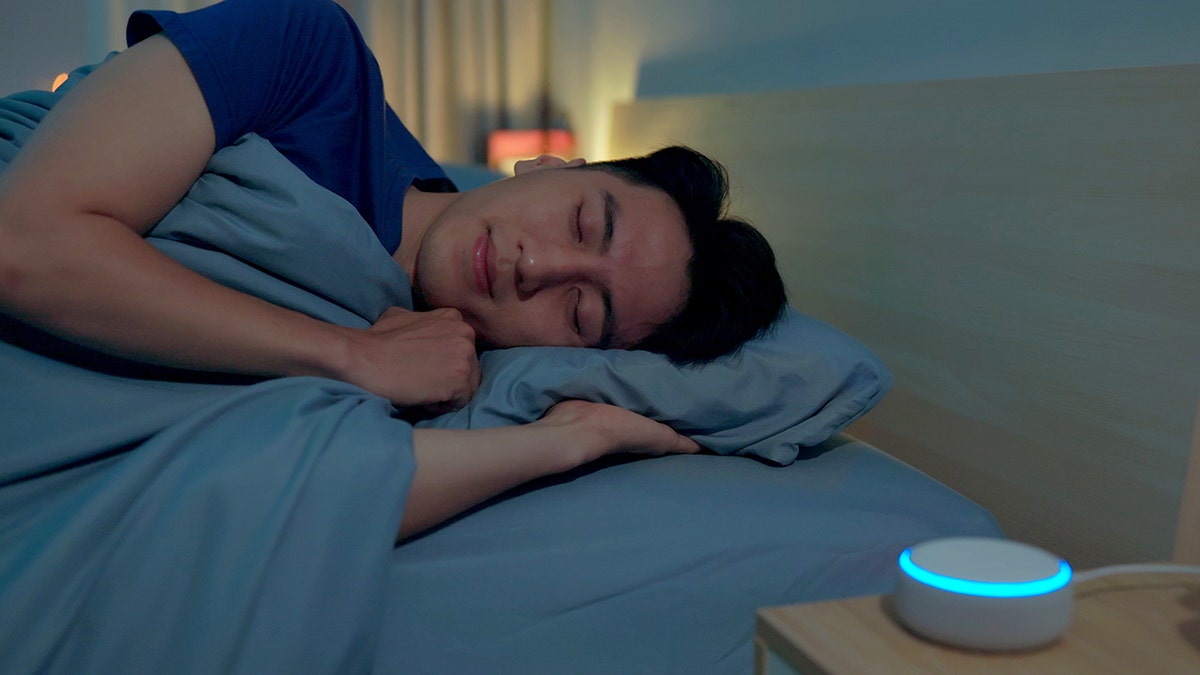
Pink noise introduces a “constant stimulus” for the brain to process, a sleep doctor said. (iStock)
Dr. William Lu, a San Francisco sleep expert and medical director of Dreem Health, said these findings are a “significant pivot” from the sound machine trend.
“While pink noise might mask external disruptions, it introduces a constant stimulus that the brain still has to process,” he told Fox News Digital. “The most concerning finding is that we may be unknowingly sacrificing segments of our REM sleep.”
Differences between ambient noises
Different types of noise could potentially have different impacts on sleep, Lu acknowledged.
White noise translates as “equal energy across all frequencies” and sounds like harsh radio static, the sleep expert said. Brown noise emphasizes lower frequencies, resulting in a “deep, bass-heavy rumble” like distant thunder or a heavy waterfall.
CLICK HERE TO SIGN UP FOR OUR HEALTH NEWSLETTER
While pink noise also has more energy at lower frequencies, but not as deep as brown, it creates a “perceptually balanced” sound like steady rainfall or wind.
“The study suggests that pink noise acts as a continuous auditory load that specifically fragments and reduces REM sleep,” Lu summarized.
Based on this type of research and data, the expert said he does not recommend using a sound machine as a “first-line” sleep aid in his own practice.
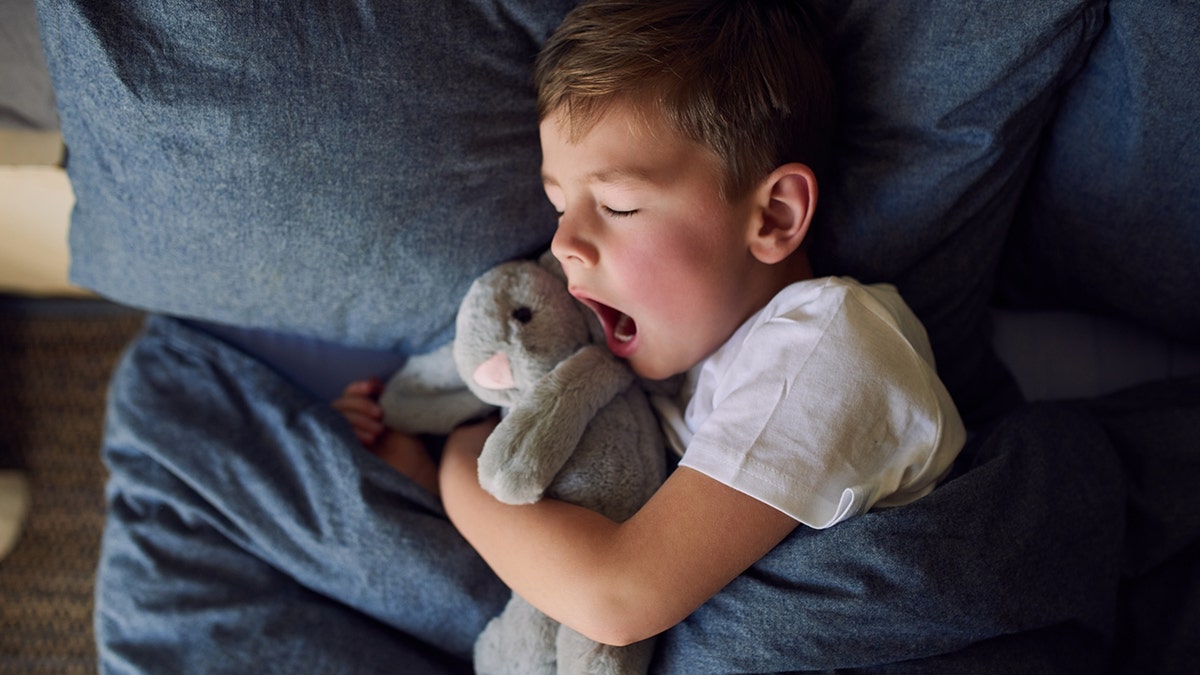
It’s common for parents to place sound machines near their newborns or toddlers while they sleep, with “good intention,” the researcher said. (iStock)
More research needed
The researchers concluded that the impact of pink noise and other audio sleep aids needs to be studied more thoroughly.
CLICK HERE TO DOWNLOAD THE FOX NEWS APP
“Overall, our results caution against the use of broadband noise, especially for newborns and toddlers, and indicate that we need more research in vulnerable populations on long-term use, on the different colors of broadband noise, and on safe broadband noise levels in relation to sleep,” Basner said.
In an interview with Fox News Digital, the researcher noted that the study, funded by the FAA, does have limitations — including that it did not investigate the effect on sleep when pink noise is used for longer periods of time.

The study was “relatively small,” and more research is necessary to weigh long-term impacts, the researchers said. (iStock)
The study was also relatively small, Basner said, and the researchers haven’t yet examined differences between individuals.
TEST YOURSELF WITH OUR LATEST LIFESTYLE QUIZ
“Until we have more research, I would recommend that if somebody wants to use pink noise, they should do it at the lowest sound level that still works for them — and if falling asleep is the main problem, put the machine/app on a timer so that it shuts off after the subject falls asleep,” he advised.
“Also, I would probably discourage general use [for] newborns and toddlers until we have more information.”